192.168.1.15
 Guide to 192.168.1.15 Admin Login
The address 192.168.1.15 belongs to the private range reserved for internal networks and is commonly assigned to a router or another device inside a home or office setup. When you type this number directly into your browser’s address bar, it connects you to the device’s administrative interface. From there, you can review network activity, update settings, and manage configuration options through a single control panel.
Instructions for Logging Into 192.168.1.15
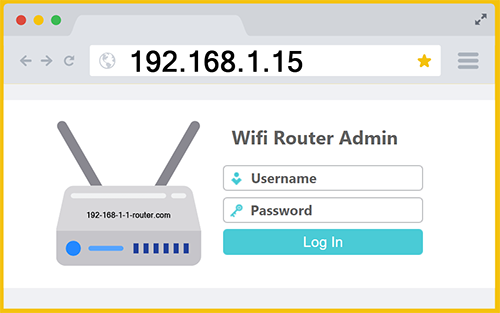
Before trying to access the admin panel, confirm that your phone is connected to the same wireless network as the router or device. Once you are connected, open a browser such as Chrome and enter “192.168.1.15” in the address bar at the top of the screen. Do not type it into a search field, as that will trigger search results instead of loading the device interface. If the device is active on your network, the sign in page will appear and you will need the administrator username and password to continue. You may also open the login page immediately by clicking the link provided below.
Potential default username: admin
Potential default passwords: admin / password
Typing https://192.168.1.15 into Google will not open your device’s configuration screen. When you enter the address into a search box, it is treated like a normal search query instead of a direct request to a device on your local network. Because of this, the browser shows search results rather than the actual login page. Smart device control panels exist only inside your private network and are not publicly hosted websites, which means search engines cannot access them. To properly open the admin page, you must enter 192.168.1.15 directly into the browser’s address bar at the top of the screen. This tells the browser to connect straight to the device on your network and load its management interface correctly.
What is 192.168.1.15 Used For?
The IP address 192.168.1.15 is part of the private IPv4 range reserved specifically for internal networks. Addresses in the 192.168.1.x range are commonly used in homes, offices, and small businesses to identify devices connected to the same local network. Unlike public IP addresses that are visible on the Internet, this address works only inside your WiFi environment. It acts as a direct pathway to a specific device, often assigned automatically by a router through DHCP.
One of the most common uses of 192.168.1.15 is accessing an administrator login page. When typed into a browser’s address bar, it can open the built in control panel of the device using that address. From this dashboard, users can adjust network settings, change passwords, configure security features, update firmware, or monitor connected devices. It serves as the command center for managing how that particular device interacts with the rest of the network.
Several types of smart devices may use 192.168.1.15 depending on how the network assigns addresses. It could belong to a secondary router, a Wi-Fi extender, a mesh node, or even a modem operating in bridge mode. In other cases, it might be assigned to a smart home hub, a network attached storage device, an IP security camera, or a smart TV. Since many routers start assigning devices at 192.168.1.2 and move upward sequentially, .15 is a very common address for mid range connected equipment. The primary router is often assigned 192.168.1.1 by default (although 192.168.0.1 is common as well).
In business environments, this IP might identify devices such as VoIP phone systems, internal file servers, print servers, or surveillance systems. IT administrators often use private IP addresses like 192.168.1.15 to keep sensitive systems isolated from public exposure. This separation enhances security because private addresses cannot be accessed directly from outside the network without special configuration such as port forwarding.
Ultimately, 192.168.1.15 represents more than just a number. It is a local access point to critical device settings and network management tools. Understanding how to use it properly, including entering it into the browser’s address bar rather than a search engine, ensures smooth access to your device’s administrative interface and gives you full control over your network environment.
192.168.15
The address 192.168.15 is incomplete and technically invalid because a proper IPv4 address must contain four numerical sections called octets, separated by three dots. In this case, only three numbers are present, which means the format is missing one section and cannot function as a usable network address. Private home networks that use the 192.168 range typically follow the structure 192.168.1.x, where the third octet identifies the subnet and the fourth identifies the specific device. To correct the typo, you would need to insert a third octet of 1, turning 192.168.15 into 192.168.1.15 (although it’s also possible there is simply a missing dot and 192.168.15 should be changed to 192.168.1.5). Once written in the full four part format, the address becomes a legitimate private IP that can properly identify a device on a local network.