192.l.168.0.1.1
 Guide to 192.l.168.0.1.1 Admin Login
A router control panel is the built-in management interface that lets you view and adjust your home network settings. Most home Wi-Fi routers use 192.168.0.1 or 192.168.1.1 as their default gateway addresses. These IPs lead to the router’s configuration interface, where you can manage important options such as your wireless name, wireless password, and other administrative settings.
How to Find 192.l.168.0.1.1 Admin
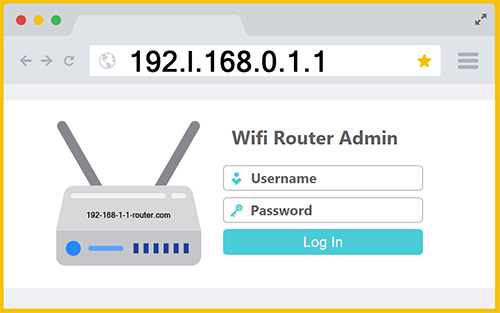
Trying to log in to your router using the address 192.l.168.0.1.1 will never work because it is not a valid IP address. It includes an extra set of numbers and even uses a letter instead of a number. For the same reason, typing https://192.l.168.0.1.1 into your browser will not open your router’s settings page. To access your home router correctly, enter 192.168.0.1 or 192.168.1.1 directly into your browser’s address bar, or use one of the blue buttons below to go there instantly.
Commonly used default username: admin
Commonly used default passwords: admin & password
You can access your home router’s admin panel from any device connected to your local network, including laptops, desktops, tablets, or other Internet-enabled devices. A widespread issue is submitting an incorrect IP address, such as 192.l.168.0.1.1, which will not load the router’s login page. To avoid this, always enter a valid router IP address, typically 192.168.0.1 or 192.168.1.1, directly into your web browser’s address bar.
Why 192.l.168.0.1.1 Does Not Work
The address 192.l.168.0.1.1 is not a valid IP address because it breaks the basic format an IP address must follow. A standard IPv4 address has four number groups called octets, separated by dots, and each group must be a number from 0 to 255. In your example, there are two problems: the second segment contains a letter “l” instead of a number, and the full address has too many segments because it includes an extra “.1” at the end. Since browsers and routers only understand correctly formatted IP addresses, that typo will never lead to a real router login page.
When you type an address like 192.l.168.0.1.1 into a browser, your device tries to interpret it, but it cannot match it to a valid destination on your local network. In many cases, the browser may simply show an error like “site can’t be reached” or “server not found” because there is no legitimate device at that address. This is especially common with router login attempts because one small mistake, an extra dot, an extra number, or a letter that looks like a number can instantly turn a working address into something meaningless.
To fix the 192.l.168.0.1.1 Internet protocol, remove the letter and the extra segment at the end to create a proper router IP instead. This should turn 192.l.168.0.1.1 into 192.168.0.1 which is a common admin panel gateway IP for wireless routers. If that doesn’t open your router’s sign in screen, try changing 192.l.168.0.1.1 into 192.168.1.1 by removing the letter “l” and the “.0” and input that into your browsers address area. Make sure it appears exactly as shown, with only four number groups, and avoid adding extra characters like “www” or extra digits. Once the login page loads, you will be at the router’s admin panel where you can sign in and manage settings like your WiFi name, password, and security options.
192.l.168.0.1.1 vs. 192.168.0.1.1
Even after removing the letter “l” from 192.l.168.0.1.1 (as IPs can only be numerical), 192.168.0.1.1 is still not a valid router IP address because it does not follow the correct structure of an IPv4 address. A proper IP address is made up of exactly four numeric sections, separated by dots. Each section represents a value between 0 and 255. In this case, 192.168.0.1.1 contains five sections instead of four, which immediately makes it invalid, even though all the characters are numbers.
When a browser or device encounters an address like 192.168.0.1.1, it cannot determine where to send the request because no device on a standard home network can be assigned an IP with five segments. Routers, modems, and other network equipment strictly adhere to the four-octet format. As a result, the browser fails to locate a destination, and the router’s login page never loads. While this IP looks more valid than 192.l.168.0.1.1 (which is obviously malformed), it is still broken. This kind of mistake is common because the extra “.1” at the end is easy to overlook, but it completely breaks the address.
To successfully access a router’s admin panel, the address 192.l.168.0.1.1 must be corrected by also removing a segment near the end, not just the letter. A person typing 192.l.168.0.1.1 into Chrome or Safari is most likely looking for IP 192.168.0.1 or 192.168.1.1, which are the most commonly used default gateway addresses for home routers. Enter these directly into Chrome or Safari’s address bar, making sure there are no extra numbers or dots. Once entered correctly, your router’s login page should load, allowing you to sign in and manage your network settings.
192.l.168.0.1.1 vs. 192.l.168.0.1 vs. 192.l.168.1.1
Even if you remove one of the extra segments from 192.l.168.0.1.1, the address is still invalid because the core problem has not been fixed. An IPv4 address must contain only numbers and dots. The moment a letter appears anywhere in the address, such as the lowercase l in 192.l.168.0.1, the entire address becomes unreadable to networking systems. Routers, browsers, and operating systems cannot interpret letters as part of an IP address, regardless of how close the rest of the format looks.
Changing the IP to address 192.l.168.1.1 does not help either, even though it visually resembles a very common router login address. While 192.168.1.1 is valid, inserting a letter instead of a number completely breaks it (which is why 192.l.168.1.1 is still nonfunctional). Computers do not guess what you meant or auto correct characters in IP addresses. They read them literally. That single letter prevents the address from being parsed into numeric values, so the browser has nowhere to send the request.
This mistake is especially common because the lowercase letter l can look almost identical to the number 1, particularly in certain fonts or on small screens. A person whose native language does not use the latin alphabet, such as someone who lives in Russia or China, may also be less likely to recognize a lowercase L as a letter. Unfortunately, networks are extremely strict. An IP address must have four numeric sections, separated by dots, with no spaces, no extra characters, and no letters of any kind. Even if everything else is perfect, one incorrect character makes the entire address unusable.
To reach a router’s admin panel successfully, the letter must be removed entirely, not replaced or worked around. The address 192.l.168.0.1.1 must be rewritten using only numbers, resulting in a valid format like 192.168.0.1 or 192.168.1.1 (not 192.l.168.01 or 192.l.168.1.1). Once 192.l.168.0.1.1 is edited so the address contains only numbers and exactly four sections, your browser should correctly locate the router on your local network and load the login page. Until both the letter and extra octet are gone, no variation of the address will ever work.