Wi-Fi 8 Guide
 Wi-Fi 8 vs Wi-Fi 7: What’s Changing and Why It Matters
For years, every new generation of Wi-Fi has arrived with a familiar promise: faster wireless connections. Wi-Fi 8 is taking a different approach. Instead of dramatically increasing theoretical speeds, the next generation of Wi-Fi is being designed to make wireless networks more reliable, efficient, and responsive in everyday use.
The IEEE is developing Wi-Fi 8 around the concept of “Ultra High Reliability.” With Wi-Fi 7 already capable of theoretical speeds far beyond what most home internet connections can deliver, Wi-Fi 8 is shifting attention toward problems people are more likely to experience, including interference, congestion, latency, dropped data, and inconsistent performance when many devices are connected at once.
Wi-Fi 8 Won’t Be Much Faster
Previous Wi-Fi generations delivered major increases in theoretical maximum speeds. Wi-Fi 5 represented an enormous jump over Wi-Fi 4, while Wi-Fi 6 and Wi-Fi 7 continued increasing wireless capacity and performance. Wi-Fi 8 breaks with that pattern!
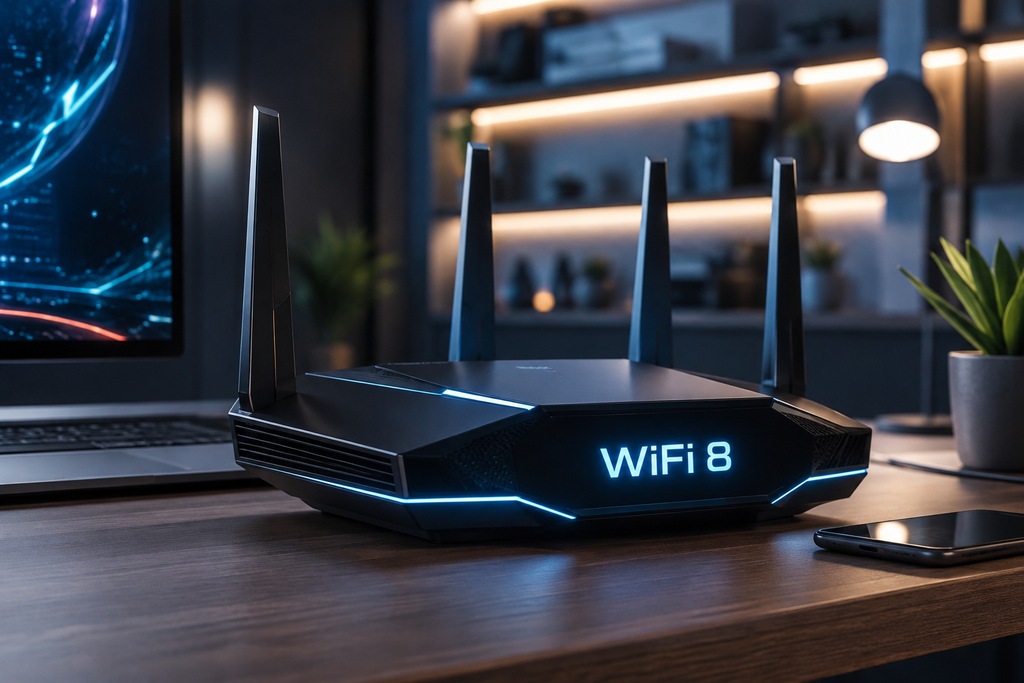
Based on the standard currently under development, Wi-Fi 8 is expected to retain many of Wi-Fi 7’s fundamental specifications. This includes support for up to 320 MHz channels, 4096-QAM modulation, the same frequency bands, a similar number of spatial streams, and approximately the same theoretical maximum data rate.
That isn’t necessarily a disadvantage. WiFi 7 can already theoretically deliver around 23 Gbit/s per band, considerably more bandwidth than a typical household can actually use. Increasing that headline number again would provide relatively little benefit for most people.
Instead, WiFi 8 is designed to make more of that available performance usable under less-than-perfect conditions.
Development goals include approximately 25% better throughput at different signal-to-interference-and-noise levels, a 25% reduction in latency in challenging high-latency situations, and a 25% reduction in MAC protocol data unit loss.
The result could be a wireless network that doesn’t look dramatically faster on a specification sheet but feels considerably more reliable in everyday use.
Built for Crowded Networks
One of the biggest challenges facing modern WiFi is the sheer number of connected devices.
A typical home may now contain laptops, smartphones, televisions, streaming boxes, security cameras, speakers, thermostats, appliances, smart lights, gaming systems, and numerous other products simultaneously communicating over Wi-Fi.
Individually, many of these devices require relatively little bandwidth. Collectively, however, they create a much more complicated wireless environment.
Wi-Fi 8 is being designed to handle these crowded networks more effectively. This will become increasingly important as smart home technology expands and households continue adding internet-connected devices.
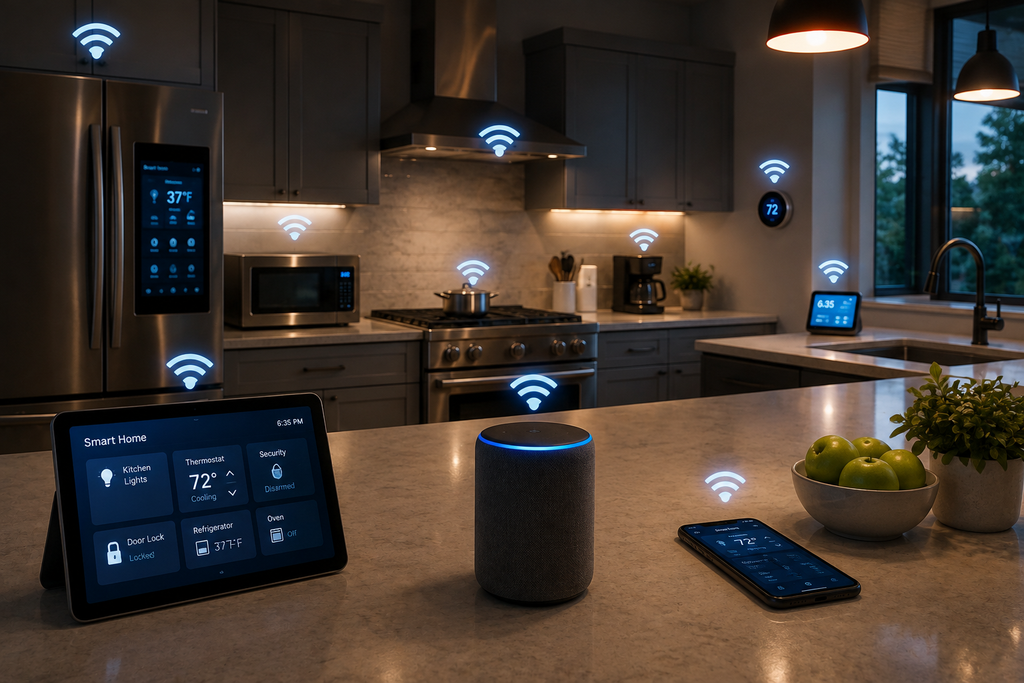
The reliability improvements could also help WiFi compete with increasingly sophisticated cellular networks. Wi-Fi 8 is expected to be finalized in 2028, while 6G cellular technology is anticipated to begin arriving in the early 2030s.
What’s New in Wi-Fi 8
WiFi 8 introduces and improves several technologies intended to make better use of available wireless spectrum.
One example is Distributed-tone Resource Units, or DRUs. Rather than concentrating a device’s transmission within a relatively narrow portion of available bandwidth, DRUs can distribute transmissions across a wider frequency range.
This can allow lower-powered devices to achieve stronger and more dependable connectivity while remaining within regulatory limits on transmission power. That could be particularly valuable for smart home devices with smaller antennas or relatively weak transmitters.
Wi-Fi 8 is also expected to introduce better methods of dealing with interference. Interference mitigation pilots are designed to help wireless connections withstand unexpected interference, particularly on unlicensed spectrum where numerous unrelated devices may be competing for space.
Another improvement involves unequal modulation. Instead of treating every spatial stream identically, WiFi 8 can adjust modulation individually according to the quality of each stream. Additional Modulation and Coding Schemes should further improve the network’s ability to make efficient use of the available connection.
Lower Latency and Less Interference
Wi-Fi 8’s improvements aren’t limited to connection reliability. The standard is also being designed to reduce delays when multiple devices compete for wireless access.
One technology under development is P-EDCA, which can provide faster channel access to prioritized devices while attempting to minimize the effect on other equipment using the network.
Wi-Fi 8 may also allow devices to communicate using non-primary channels when the primary channel is occupied. Instead of leaving otherwise usable spectrum idle simply because one channel is busy, compatible devices could continue communicating elsewhere.
These changes illustrate the broader philosophy behind WiFi 8. Rather than simply providing more theoretical capacity, the goal is to make better use of the capacity that already exists.
For home users, much of this technology will operate behind the scenes. People will still manage their routers through manufacturer apps or local router addresses such as 192/168/1/1 and 192/168/100/1. The difference is that a Wi-Fi 8 network should be better equipped to maintain strong performance as more devices and competing wireless signals are introduced.
Better WiFi Roaming
Wi-Fi 8 could also significantly improve networks that rely on multiple access points.
Moving around a large home, office, hotel, hospital, or other property can require a device to transition from one wireless access point to another. Even with modern equipment, these transitions aren’t always seamless and can occasionally cause brief interruptions.
Wi-Fi 8 aims to make roaming between access points much smoother, with the goal of creating little or no noticeable downtime as a device moves through a network.
The standard is also being designed to improve situations where multiple access points operate together. Better coordination could improve both reliability and effective throughput, which could be particularly useful for mesh Wi-Fi systems and larger wireless installations.
Why Reliability Matters
For many households, WiFi’s biggest limitation is no longer its theoretical maximum speed.
An extremely fast connection isn’t particularly useful if performance collapses in a crowded room, latency suddenly spikes, smart devices repeatedly disconnect, or moving between access points interrupts a connection.
That problem is becoming increasingly important as the number of wireless devices continues to grow. Smart home equipment can add dozens of connections to networks already serving computers, phones, televisions, gaming devices, and other bandwidth-intensive hardware.
Adding additional access points can improve coverage, but it can also introduce more complexity. Wi-Fi 8’s improved coordination between access points could help networks expand while maintaining more consistent performance.
For many users, these improvements may ultimately be more noticeable than another dramatic increase in theoretical maximum speed.
Wi-Fi 8 Is Still Years Away
Despite the progress being made, there is little reason for consumers to rush out and replace their current routers.
Wi-Fi 8 remains under development, and the standard is expected to be finalized around May 2028. Early compatible hardware could begin appearing that year, but widespread adoption will take longer as routers, computers, smartphones, and other devices gradually add support.
Wi-Fi 8 therefore represents an unusual generational upgrade. Its headline speeds may look remarkably similar to Wi-Fi 7, but that doesn’t mean wireless innovation has stalled.
Instead, the industry is shifting its attention away from numbers that look impressive on a router box and toward improvements people may actually notice every day. Better reliability, lower latency, reduced interference, smoother roaming, and stronger performance on crowded networks could make Wi-Fi 8 one of the most practically useful wireless upgrades in years.